A night light should make a toddler’s room feel reassuring without turning bedtime into playtime. The American Academy of Sleep Medicine’s 2016 consensus recommendations advise 11–14 hours of sleep per day for children aged 1–2, and 10–13 hours for ages 3–5, including naps. A gentle, adjustable glow can help parents navigate a dark room while keeping the overall sleep environment calm. It is not a sleep cure.
This guide to the Best Toddler Night Lights in 2026 focuses on practical safety, not flashy features. We’ll consider cool-to-the-touch lighting, a steady base, covered LEDs, and cords that can be routed out of a child’s reach. Check the product label and certification marks, and review current U.S. Consumer Product Safety Commission recall notices before buying. Small details count. A bright lamp beside a pillow, or a loose cord near a bed, can change how useful a light really is. For parents asking how to pick a safe bedside night light for a toddler room, the answer starts with placement and construction, then moves to brightness and color. Warm, dimmable light may feel less disruptive than a glaring beam, but every child and room is different. That part deserves a second look. A night light can support a bedtime routine; it cannot replace a safe room setup or consistent sleep habits.
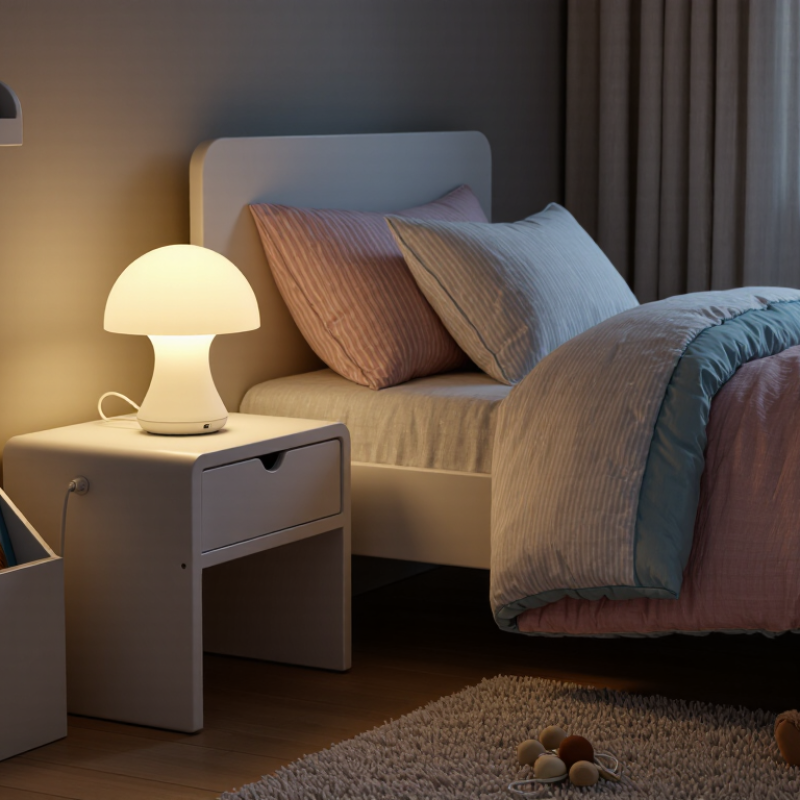
Start with the room’s actual job. Does your toddler need a gentle glow to find the bathroom, or a steady light to settle after bedtime stories? For a narrow hallway-facing room, a low-output light near the doorway may be enough. If your child wakes often, choose a glow that stays consistent overnight without lighting the whole room. Dim is enough. A bright lamp can make bedtime feel more like playtime, and cool, blue-heavy light may feel harsh when the room is dark. Check how the light looks from the bed, not just from the shop display.
Match controls to your routine. A simple timer can turn the light off after your toddler falls asleep, while a steady setting may suit children who wake and feel disoriented. If you use a rechargeable or plug-in model, keep cords and small removable parts out of reach, and place the unit where bedding cannot cover it. Warm surfaces, loose batteries, and unstable shelves deserve a closer look. Check the light after rearranging furniture, too; a safe spot can become awkward when a bed moves. There is no perfect setting for every child. Try a dim setting for several nights, then adjust if your toddler still asks for more light.
| Room or Routine Need | Useful Features | What to Look For | Safety Checks | Best Placement |
|---|---|---|---|---|
| Comfort at bedtime | Steady, dim light with simple controls | Choose the lowest brightness that helps your toddler feel settled. A warm-toned light may be less disruptive to sleep than a bright, blue-rich light. | Check that the light stays cool during normal use and has no small detachable parts within reach. | Place it across the room or behind furniture so it does not shine directly into your toddler’s eyes. |
| Overnight comfort | Low-glare light that can remain on all night | Look for a stable setting without flashing effects, bright status indicators, or automatic color changes. | Follow the manufacturer’s instructions for continuous use. Keep the light away from bedding, curtains, and other materials that could cover it. | Use a stable surface outside the crib or bed area, where it cannot be pulled down. |
| Night-time toilet trips | Low-level pathway illumination; optional motion sensor | A sensor can turn light on only when needed. Check its range and whether it switches on gently rather than at full brightness. | Secure the unit so it cannot become a trip or pull hazard. Keep cords out of reach and away from walking routes. | Illuminate the route to the bathroom without shining directly toward the bed. |
| Shared bedroom | Directional light, dimmer, or adjustable timer | Choose a setting that gives enough light for one child without lighting the whole room. A timer can turn the light off after the bedtime routine. | Make sure controls and cables are not accessible for chewing, pulling, or repeated play. | Aim light toward a wall or floor area away from both beds. |
| Outlet-based setup | Compact plug-in design with a low-profile shape | Check that the product does not block nearby outlets or switches and fits securely in the intended socket. | Do not use a damaged unit or overloaded adapter. Keep the outlet and light away from water and follow the product’s electrical instructions. | Use an outlet that is not beside the bed and is not accessible for your toddler to touch or pull. |
| Portable use or travel | Rechargeable, cordless light with a stable base | Check the stated battery life, charging method, and whether the light has a simple dim setting. | Prefer a design with a securely enclosed battery. Keep charging cables and any loose batteries out of reach; button and coin batteries can cause severe internal injuries if swallowed. | Place on a stable surface, away from the sleep space, and unplug the charger before bedtime if the instructions require it. |
| Choosing a product | Clear instructions and verifiable safety information | Review the product’s intended use, cleaning directions, operating temperature, and applicable safety certification for your country. | Inspect regularly for cracks, loose parts, damaged plugs, or exposed wiring, and stop using a damaged light. | Use only in the location and manner described by the manufacturer. |
Practical rule: Choose the dimmest light that meets the room’s needs, keep it outside the sleep space, and secure all cords and batteries beyond your toddler’s reach. A night light does not replace normal supervision or safe-sleep practices.
You can adjust its glow to suit the room. A single setting may feel too bright at 2 a.m.
Check it after dark, with the curtains closed. Give your eyes a minute to adjust. It can still seem brighter than expected.
Look for a faint outline of the doorway or floor, not a light that fills the bed. Keep it away from your child’s face.
Not necessarily. Compare the lowest levels and how gradually the light dims. Touch controls can be awkward during a sleepy wake-up.
Look for a recognized electrical safety listing and clear product information on the label and instructions. A vague safety claim is not enough.
Search official consumer product recall notices using the model number and identifying details. Match them carefully; similar lights may have different models.
Check the plug and casing for cracks, looseness, or discoloration. Don’t use a damaged light or one that feels unusually hot.
Keep it away from bedding, curtains, and places a toddler can pull or chew it. Follow the placement and charging instructions. Easy to overlook.
Choosing a toddler night light starts with the room and bedtime routine: consider whether it is needed for comfort, nighttime checks, or gentle navigation, then look for features that suit those needs. When deciding how to pick a safe bedside night light for a toddler room, prioritize a soft, low-level glow and adjustable brightness so the light is calming without being unnecessarily bright. Simple controls and a stable design can also make everyday use easier.
Before buying, check for a UL 1786 listing and review relevant CPSC recall alerts. LED models are a practical option because the U.S. Department of Energy says LEDs use at least 75% less energy than incandescent lighting. Place the light where your child cannot reach cords, plugs, or small removable parts, and keep it away from bedding and other items that could cover it. These steps help balance comfort, energy use, and safer placement.

 Quack Lamp