What Is the Best Way to Hide Floating Floor Lamp Cords?

Time:2026-10-19 Author:Sienna
0%

A floating floor lamp can create a calm, weightless look, but its cord often ruins the illusion. A black cable crossing pale flooring becomes noticeable within seconds. The best solution depends on your floor material, lamp design, and outlet location. It should look neat without creating a tripping hazard.

This guide explains how to hide messy extension cords from a floating floor lamp using practical, low-risk methods. These include routing cables behind furniture, using paintable cord covers, securing wires along baseboards, and choosing a shorter, correctly rated extension cord. Measure the route before buying supplies. A few extra inches can prevent tension near the lamp plug.

Safety comes first. Never place a cord beneath a loose rug, pinch it under heavy furniture, or cover damaged insulation. Check the lamp manufacturer’s instructions and confirm that the extension cord supports the lamp’s power requirements. Adhesive clips may work well on smooth walls, yet they can fail on dusty paint or textured surfaces. I have found that the cleanest result usually comes from planning the cable path before decorating. Still, no method is perfect. Some cord channels remain visible in bright sunlight, and removable products may leave residue. The goal is not complete invisibility. It is a secure, tidy installation that blends naturally with the room. Small details matter, especially near corners, doors, and walking paths.
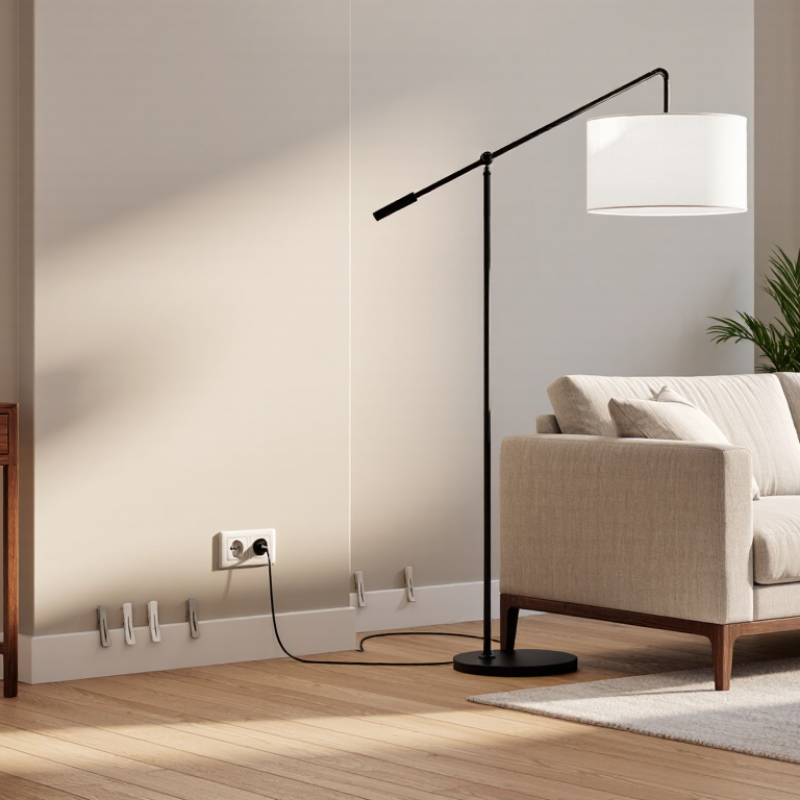
What Is the Best Way to Hide Floating Floor Lamp Cords?

Measure the Route: Preserve the 36-Inch ADA Clear-Path Benchmark

Before hiding a floating floor lamp cord, measure the walking route, not just the wall. The ADA 36-inch clear-path benchmark offers a useful planning target for accessible movement. It is a benchmark, not a universal approval for every home. Mark the route with painter’s tape, then measure between furniture edges, door swings, and the lamp’s base.

A practical test uses a chair or mobility aid. Roll it through the marked space. Watch for cord loops near corners and thresholds. A wall-side cord channel can keep the cable flat and visually quiet. Choose a low-profile channel that does not create a raised edge. Keep connectors outside walking areas. Never place a loose cord under a rug, where pressure and heat may become hidden problems.

I once measured from the lamp to the wall and missed the open cabinet door. That mistake reduced the usable path by several inches. Remeasure with the room fully used. Leave extra clearance when possible, especially near seating or a narrow hallway. Attach the cord gently, without sharp bends or crushing points. If the route cannot preserve 36 inches, relocate the lamp or outlet instead of forcing the cord into the path. Small changes matter. The room should feel easy to cross, even when the light is on and daily clutter returns.

Reject In-Floor Concealment: NEC 400.12 Bars Hidden Flexible Cords

A floating floor lamp can look clean without hiding its flexible cord inside the floor. The tempting solution is to cut a channel beneath the flooring. However, NEC 400.12 prohibits using flexible cords where they are concealed by floors, walls, ceilings, or similar building surfaces. This rule helps prevent abrasion, heat buildup, and unnoticed damage. A cord buried under planks may appear elegant, yet it becomes difficult to inspect or replace. Neat does not always mean safe.

Place the lamp near an existing receptacle whenever possible. Route the cord along a wall edge, behind suitable furniture, or through an approved surface raceway. Use a low-profile cord cover across exposed walking areas. Keep connectors accessible, and avoid tight bends near the lamp base. Local electrical requirements can differ by location and code edition. A qualified electrician should confirm the installation, especially when adding outlets or modifying walls.

Tips: Measure the lamp position before moving furniture. Mark the walking path with removable tape. Choose a visible, protected route instead of cutting the floor. Check the cord periodically for crushed insulation, warm spots, or loose connections. A slightly visible cord is usually easier to inspect than a hidden one. I would not trust a rug to solve every routing problem; it can shift, bunch, or conceal damage. That small detail is easy to overlook.

Choose a Raceway Rated for the Cord’s AWG, Voltage, and Ampacity

A floating floor lamp looks clean until its cord crosses the walking path. Choose a listed raceway that permits flexible cords, not only building conductors. Match the raceway opening to the cord’s AWG and outside diameter. A tight channel can compress insulation near a sharp bend.

Check voltage and ampacity separately. AWG identifies conductor size, but it does not determine safe current alone. Insulation temperature, cord length, grouping, and plug connections also matter. NFPA 70, 2023 edition, Article 400 and Table 400.5(A)(1), provide flexible-cord ampacity guidance. The raceway’s installation instructions must also allow that cord type and voltage.

Do not use a raceway rated for 300 volts with a cord requiring 600 volts. Do not assume a 15-ampere receptacle makes every cord suitable for 15 amperes. NFPA’s Home Fires Involving Electrical Failure or Malfunction report recorded about 32,620 home structure fires annually from 2015–2019. Those fires caused approximately 470 deaths, 1,100 injuries, and 1.3 billion dollars in property damage. ESFI guidance also emphasizes inspecting damaged insulation and avoiding overloaded connections. A practical check is simple: read the cord jacket, measure its diameter, verify its ampacity, and compare every value with the raceway listing. I would still recheck the bend radius. That small detail is easy to miss.

What Is the Best Way to Hide Floating Floor Lamp Cords? — Choose a Raceway Rated for the Cord’s AWG, Voltage, and Ampacity
Selection Factor 18 AWG Cord 16 AWG Cord 14 AWG Cord 12 AWG Cord
Typical lighting-cord use Low-power lamps and decorative lighting General portable lamps and small lighting loads Higher-power portable lighting equipment Heavy-duty portable equipment; uncommon for ordinary floor lamps
Example cord ampacity marking Often marked around 7 A, depending on cord type and insulation Often marked around 10 A, depending on cord type and insulation Often marked around 15 A, depending on cord type and insulation Often marked around 20 A, depending on cord type and insulation
Required ampacity check The connected load must not exceed the cord’s actual printed ampacity. AWG alone does not establish the final rating.
Common residential voltage 120 V AC 120 V AC 120 V AC 120 V AC
Raceway voltage rating Use a raceway rated for at least 120 V AC Use a raceway rated for at least 120 V AC Use a raceway rated for at least 120 V AC Use a raceway rated for at least 120 V AC
Raceway size requirement The raceway’s clear internal opening must be larger than the cord’s measured outside diameter. Do not size the raceway from AWG alone because insulation thickness varies.
Practical installation clearance Allow enough space for the cord to enter without sharp bending, crushing, pinching, or excessive pulling at the lamp plug and socket.
Heat and ampacity consideration A tightly packed or enclosed raceway can reduce heat dissipation. Select a raceway system whose instructions permit the cord type and electrical load; never assume a decorative channel increases ampacity.
Best raceway profile for a floating floor lamp A low-profile, surface-mounted raceway with a removable cover and smooth, rounded edges is usually the easiest option for hiding a cord along a wall or baseboard.
Recommended finish Choose a paintable or color-matched raceway, keep it straight and securely fastened, and avoid routing it where furniture, doors, or foot traffic can damage it.
Important safety limitation Use the cord and raceway only as permitted by their markings and installation instructions. Do not place a damaged cord inside a raceway, splice a cord inside the channel, or permanently conceal an extension cord where local electrical rules prohibit it.

Install UL 153-Listed Lamps with UL 817-Compliant Cord Sets

When a floor lamp appears to float, hidden wiring can make the room look cleaner. The safe approach starts before the cord disappears. Choose a portable lamp marked as UL 153-listed, then inspect its label and instructions. This listing indicates evaluation against relevant construction and electrical safety requirements. It does not make careless cord placement safe. Keep the lamp stable, with its base fully supported and its cord exit unobstructed. Small details matter.

Pair it with a UL 817-compliant cord set when the lamp requires a separate cord. Check the cord set’s markings, rating, plug condition, and compatibility with the lamp. Do not bury the cable under a rug, trap it beneath furniture, or press it against a hot surface. Instead, route it along a wall edge or inside a purpose-made cable channel. Leave gentle slack near the lamp. Sharp bends can damage insulation over time. I prefer measuring the route with string first, because guessing often leaves an ugly loop.

Before plugging in, inspect the entire path in daylight. Look for crushed sections, loose connections, and warm plugs. A cord that feels hot needs attention. I once focused too much on hiding the line and overlooked a tight bend behind a cabinet. That mistake changed my installation habits. Safety should remain visible, even when the cord is not.

Test the Finished Cover for Trip, Heat, and Strain-Relief Risks

A finished cord cover should be tested like part of the floor, not treated as decoration. I place the floating floor lamp where it will stay, then walk across the route in socks and shoes. I approach it from both directions, especially in dim light. The cover should feel flat underfoot, without rocking, lifting, or catching a toe. Keep it that way.

I also check heat after the lamp has operated for several hours. I touch the cover, plug, and nearby floor carefully. They may feel slightly warm, but they should never become hot, smell unusual, or soften. A thick fabric wrap can trap heat around a power adapter. That detail is easy to miss. Leave ventilation around adapters, switches, and any part that produces heat.

Strain relief deserves a close look. The cord should enter the cover smoothly, without a sharp bend at the lamp base or wall outlet. I gently move the lamp through its normal range, then inspect the plug and socket for pulling. Never hide a damaged cable or press it beneath furniture. A loose cover also needs attention, even if it looks neat. I once underestimated a small edge near a doorway; evening shadows made it much harder to see. Repositioning the lamp and securing the cover with a low-profile, removable method solved the problem. If the cord shows cuts, crushed insulation, or exposed wiring, stop using the lamp and seek qualified electrical advice.

FAQS

How should I measure a lamp cord’s walking route?

Measure between furniture edges, door swings, and the lamp base. Mark the route with painter’s tape. Aim for at least 36 inches of clear space when possible. A wall measurement alone can mislead you. I once missed an open cabinet door.

What can test whether the route is truly usable?

Push a chair or mobility aid through the taped route. Try both directions. Check corners, thresholds, and narrow areas. Watch for cord loops near doorways. Daily clutter may reduce the space later.

Where should a hidden cord run?

Route it beside a wall or inside a purpose-made cable channel. Choose a low-profile channel with no raised edge. Keep connectors outside walking areas. Leave gentle slack near the lamp. Do not force a tight route.

Can I place the cord under a rug?

No. A rug can hide pressure, heat, and damage. Do not trap the cord beneath furniture either. Keep it visible enough for inspection. Neatness should not defeat safety.

What should I check before connecting the lamp?

Confirm the lamp’s safety markings and instructions. Check the cord rating, plug condition, and compatibility. Keep the lamp base fully supported. The cord exit should remain unobstructed. Small details matter.

How can I test a finished cord cover?

Walk across it in socks and shoes. Test it from both directions, including dim lighting. It should feel flat and stable. It must not rock, lift, or catch your toe. A cover is part of the floor now.

How do I check for overheating?

Let the lamp operate for several hours. Carefully touch the cover, plug, and nearby floor. They may feel slightly warm. They should never feel hot, smell unusual, or soften. Leave ventilation around adapters and switches.

What signs mean I should stop using the lamp?

Stop if the cord has cuts, crushed insulation, or exposed wiring. Also stop when a plug becomes hot. Look for sharp bends and pulling near the outlet. Seek qualified electrical advice before using it again. I used to focus too much on hiding the cable.

Conclusion

The safest answer to how to hide messy extension cords from a floating floor lamp begins with careful route planning. Measure the cord path and preserve at least a 36-inch clear walking route wherever possible. Avoid burying or permanently concealing flexible cords inside floors or walls, since this can create inspection, heat, and maintenance problems. Instead, use a surface raceway or cord cover that is properly sized for the cord’s wire gauge, voltage, and ampacity. The cover should protect the cable without crushing it or restricting airflow.

Choose a lamp and cord set designed for safe residential use, with appropriate listing and strain relief. After installation, inspect the entire route for raised edges, sharp bends, loose sections, or areas where furniture may pinch the cord. Run the lamp briefly and check for unusual warmth, movement, or tension. A successful installation should look neat while keeping the cord accessible, protected, and free from trip hazards.

Sienna

Sienna

Sienna is a skilled marketing professional with a deep expertise in our company’s core products and services. With a passion for innovation and detail, she plays a pivotal role in crafting insightful blog posts that not only highlight the unique features of our offerings but also provide valuable......