How to Choose Living Room Floor Lamp Height in 2026

Time:2026-11-06 Author:Sophia
0%

Choosing a floor lamp is not just about filling an empty corner. Its height affects reading comfort, glare, and how balanced the room feels. To learn how to choose the right height for a living room floor lamp, begin with the seat, not the ceiling. Sit on your sofa and note where your eyes fall. A shade that shines directly into them can make a beautiful lamp tiring to use. Small detail. Big difference.

Interior designer Nate Berkus has said, “Your home should tell the story of who you are, and be a collection of what you love.” That broader design principle is useful when selecting a lamp: let the room’s furniture and daily habits guide the choice. As a practical starting point, many living-room floor lamps stand about 58 to 64 inches tall. But that range is not a rule. Beside a low sofa, a tall shade may look imposing; beside a deep armchair, a shorter lamp may leave a reader in shadow. Measure the seat and lamp together, then check the shade from your usual sitting position. A cardboard tube or adjustable task light can help you test the height before buying. Slightly makeshift, but useful. This guide explores proportions, shade placement, ceiling height, and reading needs, so you can choose a lamp that feels comfortable in your actual room—not just in a product photo.
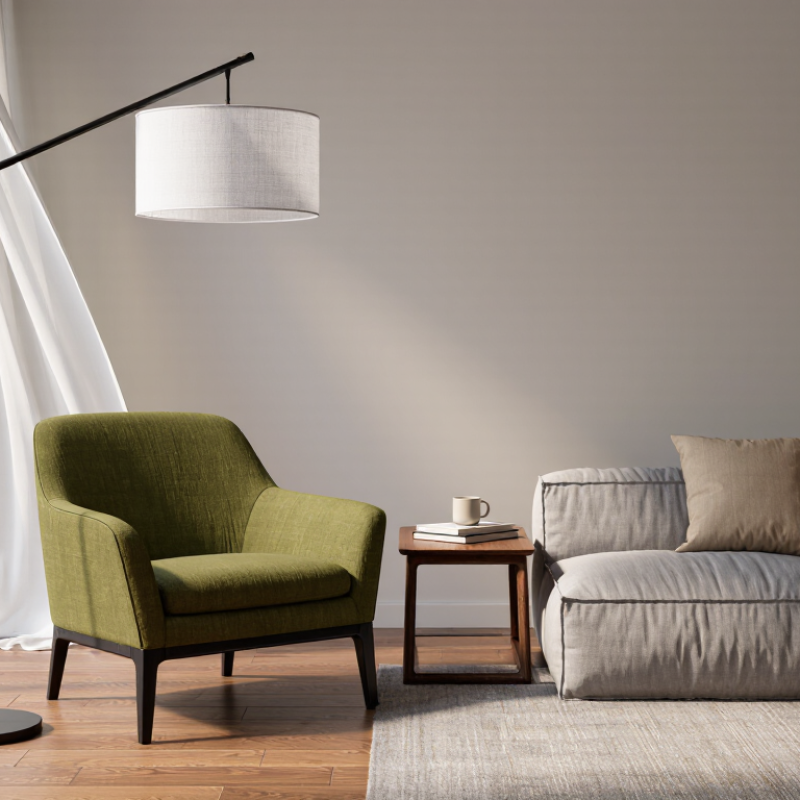
How to Choose Living Room Floor Lamp Height in 2026

Factors That Determine the Right Floor Lamp Height

The right floor lamp height depends on how people use the room, not just its ceiling. For a reading spot, position the shade so the bulb is hidden from seated eye level. Light should fall across the page without shining directly into your eyes. Measure from the floor beside the chair, then check the lamp beside the actual seat. Measure before shopping. A deep sofa cushion can lower your seated eye line more than expected.

Room scale matters, too. A tall lamp may suit a high ceiling, but it can feel imposing beside a low-backed loveseat. In a compact room, a slimmer profile often keeps the corner visually open. Nearby furniture also changes the right height: a lamp beside a side table should not crowd a table lamp or block artwork. Check the shade’s width and the switch location, not just the overall measurement. Small details matter. There is no perfect formula, and tape-measure checks can still feel different once the lamp is in place. If possible, mark the proposed height on a wall and view it from the main seat. Height is only part of comfort.

How to Measure Seating, Ceiling Height, and Nearby Surfaces

Start with the seat, not the lamp catalog. Sit in your usual spot and measure from the floor to your eyes. The height changes with cushion softness, posture, and whether you lean back. A shade that sits near or slightly above seated eye level can reduce direct glare. For many living rooms, that may put the shade bottom around 40 to 48 inches from the floor, but your own measurements matter more.

Check the ceiling and nearby surfaces before choosing the lamp’s total height. Measure from floor to ceiling, then leave comfortable clearance above the shade, especially beneath a low ceiling or ceiling fan. A side table, sofa arm, or reading chair also affects placement. Keep the light source from shining straight across a tabletop into your eyes. If you use the lamp beside a sofa, test the height while seated and while reaching for a book. Small adjustments matter.

Tips: Tape a paper shade outline to a stand-in pole and check it at night. Measure twice. Your posture may change, and that is worth allowing for.

How to Choose Living Room Floor Lamp Height in 2026 — How to Measure Seating, Ceiling Height, and Nearby Surfaces

Living Room Situation What to Measure Useful Height to Consider Fit and Placement Check
Standard sofa seating Measure from the floor to the seated eye level of the person who uses the sofa most. Also note the seat cushion height. A common starting range for a floor lamp is 58–66 in (147–168 cm) overall. Check the shade’s lower edge from the seated position. It should direct light where needed without shining into the eyes; adjust the shade or lamp position if it causes glare.
Low-profile sofa or lounge chair Measure seated eye level while sitting naturally, not just the seat height. Record the distance from the floor to the top of the seat as a separate reference. Start with 56–64 in (142–163 cm), then compare the shade position with the seated eye line. A lower seat can make a standard-height lamp feel visually tall. Test the lamp beside the actual furniture before deciding.
Reading beside an armchair Measure seated eye level, shoulder height, and the distance from the chair to the proposed lamp position. Often 58–66 in (147–168 cm); an adjustable or directional head can make the light easier to aim. Position the light to illuminate the book or task while keeping the bulb and bright parts of the shade out of the reader’s direct line of sight.
Lamp beside an end table Measure the table height from the floor and the distance between the table, seat, and lamp base. Choose the lamp’s height by checking the shade against seated eye level; the table height alone does not determine the right floor-lamp height. Make sure the lamp base does not obstruct the walking path or interfere with the table. Compare the shade’s position with any table lamp nearby.
Room with an 8 ft (244 cm) ceiling Measure from the finished floor to the ceiling, including any ceiling beams or sloped areas above the intended location. A 58–72 in (147–183 cm) lamp will usually leave ample ceiling clearance in an 8 ft room. Confirm clearance for the shade and any upward-facing light. A gap of about 12 in (30 cm) or more is a practical visual target, not a universal requirement.
Lower ceiling or ceiling obstruction Measure the lowest overhead point above the lamp location, not just the room’s stated ceiling height. Keep the lamp top comfortably below the obstruction; select a shorter model if needed. Allow room for assembly, shade removal, and safe placement. Follow the lamp’s manufacturer instructions for installation and clearance.
Tall ceiling Measure the full ceiling height and compare it with the height of nearby furniture and existing light sources. A standard 58–72 in (147–183 cm) lamp can still work; choose a taller model only if it suits the seating and shade position. Do not choose a lamp based on ceiling height alone. Its light should still work comfortably from the chair or sofa.
Final at-home check Mark the intended lamp height on a wall with painter’s tape, then sit in the usual seat and check the marked shade position. Compare the proposed overall height and shade height with seated eye level and the nearby furniture. Check sightlines, glare, walking clearance, outlet access, and whether the switch is easy to reach before purchasing.

Measurement note: Height ranges are starting points, not fixed standards. Shade shape, bulb position, seat posture, and personal preference affect comfort. For conversions, 1 in = 2.54 cm.

How to Match Lamp Height to Reading and Ambient Lighting

Choose a living room floor lamp by its light on the page, not by its height alone. The Illuminating Engineering Society’s Lighting Handbook places many reading tasks around 300–500 lux, depending on the reader and the task. Ambient light can stay softer. A focused lamp beside an armchair should brighten a book without turning the whole room harsh.

For reading, start with a lamp around 58–64 inches tall, then check the shade from your usual seated position. Its lower edge should sit near or slightly below eye level, directing light onto the page rather than into your eyes. Place it just behind and beside your shoulder. Small changes matter. For ambient lighting, choose a taller or more diffused shade, and aim the glow toward a wall or ceiling. This spreads light across the room and softens sharp shadows. Test it after dark: a pale page, dark sofa, and reflective side table can all change how bright the lamp feels. I still find that a few inches can make the difference, and the “right” height depends on the chair.

How to Check Shade Position, Sightlines, and Room Proportion

A living room floor lamp should sit comfortably beside its main task, not simply fill an empty corner. Check the shade from the sofa and from the room entrance. Its lower edge should not cut across the seated person’s eye line or shine directly into their eyes. Sit in your usual spot and look up naturally. A small adjustment can change the whole feeling.

For reading, place the lamp beside or slightly behind the chair, with the light directed onto the page. Keep the bulb hidden from normal seated views; a visible glare spot becomes tiring after a few minutes. If the lamp has a wide shade, check that it does not block a view across the room. Walk past it, too. The shade should clear common paths and nearby furniture.

Room proportion matters as much as a measurement. In a room with a low sofa and a compact side table, a very tall lamp can feel top-heavy. A broad sofa may need a taller silhouette to balance its visual weight. Compare the shade with nearby features, such as a window sill or the top of a bookcase. There is no perfect ratio. I have found that tape on the wall can help, though it looks awkward for a day. Mark the planned shade height, then view it from both standing and seated positions before choosing.

How to Adjust Placement for Stability and Everyday Use

For a living room floor lamp, set the shade so its lower edge sits near seated eye level. The exact height matters less than what the light does: it should illuminate a book without shining directly into someone’s eyes. Then test the lamp from the sofa and from the main walkway. Small changes matter. A few inches can keep the shade clear of a door swing or a passing shoulder.

Stability starts with the floor. Place the base on a firm, level surface, not halfway on a thick rug where it may wobble. Keep it outside the walking path, and route the cord along a wall rather than across an open floor. Check that the base stays steady when the cord is gently touched. The U.S. Consumer Product Safety Commission’s 2023 Furniture and TV Tip-Over Report counted 581 reported tip-over deaths from 2000 through 2021; those cases involved furniture or televisions, not floor lamps. It is not lamp-specific evidence, but it reinforces the value of stable placement. In homes with children or pets, leave extra clearance around the lamp. A crowded corner can look tidy, yet a narrow gap may make the cord easier to snag. Recheck after rearranging furniture. I’d still question any placement that feels awkward to walk past.

FAQS

How do I choose the right floor lamp height for reading?

Sit in your usual chair and check the shade’s lower edge. Hide the bulb from your normal seated view. The light should reach the page without shining into your eyes.

Should I measure from the floor or the chair?

Measure from the floor beside the actual chair. Deep sofa cushions can lower your seated eye line more than expected. Check before shopping.

Where should I place a floor lamp beside a reading chair?

Place it beside or slightly behind the chair. Aim the light toward your book, not your face. Then check the view from the sofa.

How can I tell if a lamp looks too tall?

Compare it with the sofa, side table, windowsill, and bookcase. A tall lamp may feel top-heavy beside low furniture. There is no perfect ratio.

How do I check the lamp’s sightlines?

Sit down, look up naturally, and view the lamp from the room entrance. Make sure the shade does not block artwork or a view across the room. Walk past it, too.

Can I test the height before buying?

Mark the planned shade height on a wall with tape. Look from seated and standing positions. It looks awkward, but it can reveal a poor fit.

Where should the lamp base and cord go?

Set the base on firm, level flooring rather than halfway on a thick rug. Keep it outside the walking path. Route the cord along a wall.

What should I check after moving furniture?

Test the lamp again from the main seat and walkway. Check that the base stays steady and the cord is not easy to snag. I’d rethink any placement that feels awkward to pass.

Conclusion

Choosing the right floor lamp height starts with the room’s proportions and the way you use the space. Measure the seat height, ceiling height, and nearby tables or shelves so the lamp fits naturally beside your furniture. Consider whether you need focused light for reading or a softer glow for the whole room; each purpose may call for a different lamp and shade position. To decide how to choose the right height for a living room floor lamp, check that the shade directs light where it is useful without shining into seated eye level or blocking views across the room.

Before settling on a height, compare the lamp with the sofa, chairs, and other vertical features to keep the room balanced. Place it where it is easy to reach and does not obstruct walkways, then check that its base feels stable on the floor. A few small adjustments can improve comfort, lighting, and everyday usability.

Sophia

Sophia

Sophia is a dedicated marketing professional with an exceptional depth of knowledge about her company's products and services. With a keen understanding of market trends and customer needs, she crafts insightful blog posts that not only inform but also engage readers, enriching the company’s online......