A good reading nook does not need a spare room or expensive furniture. It needs a comfortable seat, a useful light, and a little space to settle in. If you are wondering how to create a cozy reading nook with a gooseneck lamp, start with the spot where you already enjoy sitting. A chair beside a window, a quiet corner, or even the end of a sofa can work.
Interior designer Nate Berkus has said, “Your home should tell the story of who you are, and be a collection of what you love.” That idea suits a reading nook: choose a cushion, throw, or small table that feels personal, rather than copying a showroom. Then position the gooseneck lamp so its beam falls across the page without shining directly into your eyes. Check it while seated, not while standing. Small difference. Big comfort.
The following seven tips explore lamp placement, bulb choice, seating, and the little details that make a corner inviting. They are practical starting points, not strict rules; room layouts and eyesight vary. A lamp that works beautifully beside one chair may feel awkward beside another. Adjust the neck, test the light at night, and notice where shadows land. Sometimes the first arrangement is not quite right. That is useful information, too.
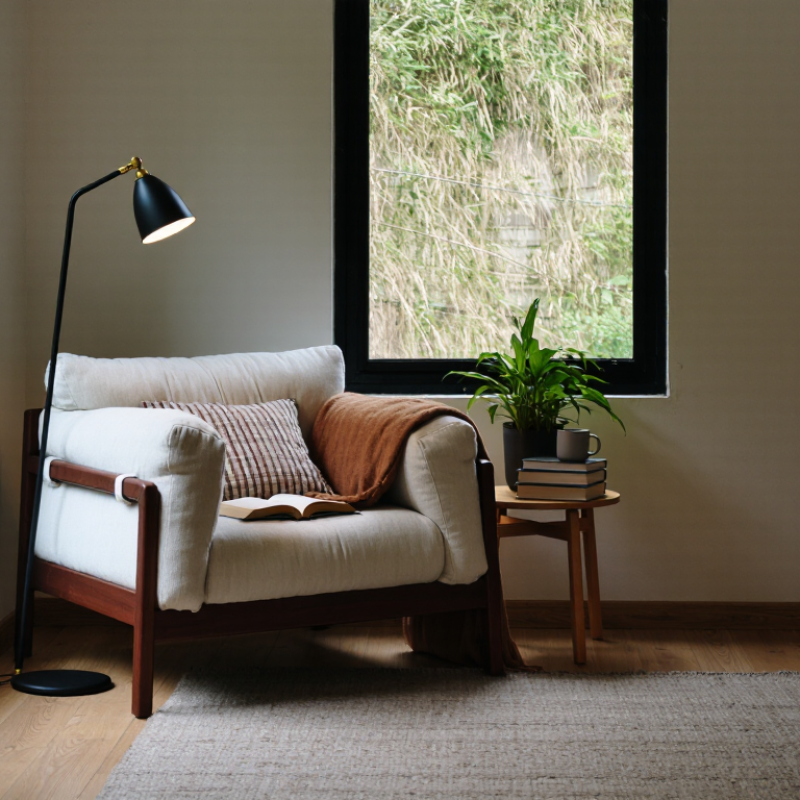
Choosing a Quiet Corner for Your Reading Nook
A quiet corner can make a reading nook feel separate from the day without needing a spare room. Look for a spot away from the television, kitchen traffic, and doors that open often. A bedroom corner or the end of a hallway may work. Sit there for ten minutes at different times of day. Notice the sounds, drafts, and changing light. Quiet is not always silent; a steady background hum may be less distracting than sudden noise. Check that the floor is level and that a chair can sit comfortably without blocking a walkway. Small detail, big difference.
Tips: Choose a corner with an outlet nearby, so a gooseneck lamp can reach your book without a stretched cord crossing the floor. Place the lamp beside or behind your reading shoulder, then adjust its head to light the page rather than your eyes. If sunlight reaches the nook, check for glare in the afternoon. Add a cushion or small side table only if there is room to move easily. Too much furniture can make a calm spot feel cramped. I once thought a window seat was ideal, but street noise made it harder to settle in. Test the corner before committing, and be willing to change your mind.
7 Tips to Create a Cozy Reading Nook with a Gooseneck Lamp
Choosing a Quiet Corner for Your Reading Nook
Choose a calm corner away from busy walkways and distracting noise. A gooseneck lamp lets you direct light onto the page; around 300–500 lux is a commonly suggested range for reading, while general living-area lighting is often lower, around 100–300 lux. Actual needs vary with age, eyesight, room conditions, and personal comfort.
Selecting a Gooseneck Lamp for Comfortable Lighting
A gooseneck lamp works best when its light reaches the page without shining directly into your eyes. Sit in your usual reading chair and notice where your book rests. A flexible neck lets you move the shade closer for small print, then shift it away when you turn pages. That small adjustment matters.
Check the lamp’s brightness and color before choosing it.
A dimmable setting is useful when daylight fades, while a warm, soft-white bulb can feel gentler during evening reading. Avoid relying on a very bright bulb to fix poor placement; glare on glossy pages can make your eyes work harder. Aim the shade toward the book, not across the room. Try it at night, too. A lamp that looks comfortable in a bright shop may feel harsh beside a dark wall.
Stability matters as much as appearance.
A heavy base can stay put on a narrow side table, while a clamp mount may free up space but needs a secure edge. Check whether the neck holds its position after you adjust it. Some slowly droop. That is annoying, and worth noticing before purchase. If possible, test the lamp from your actual reading position, with the chair and table arranged as they will be at home.
Arranging Seating and Side Tables for Easy Reading
Place the chair before choosing the side table. Sit with a book, then check whether your shoulders stay relaxed and your feet rest flat. A small armchair can feel inviting, but deep cushions may push your neck forward. IES guidance in the Lighting Handbook places reading tasks in a range of roughly 300–500 lux, depending on conditions. Use a gooseneck lamp to direct light onto the page, not into your eyes. Keep the head just above and beside the book; glossy pages can still glare. It takes a little adjusting.
Set the side table close enough to reach without twisting, but leave room for your knees and the chair’s arms. OSHA’s workstation ergonomics guidance recommends keeping frequently used items within easy reach—a practical principle for a nook, too. Put your book, glasses, and a cup on the tabletop, rather than stacking them on the seat. Check that the lamp base or clamp does not crowd those essentials. A table that is too low can make you hunch; one that is too high may block the lamp’s beam. Test the layout for ten minutes, then move things. My first arrangement usually looks neat and reads awkwardly.
Layering Textiles and Storage to Add Warmth
A cozy reading nook needs more than a soft chair. Start with a washable rug, then layer a cotton throw and one textured cushion. Keep the palette close—oatmeal, rust, or moss—so the fabrics feel calm rather than cluttered. A gooseneck lamp can direct light onto the page while leaving the rest of the corner softer. The Illuminating Engineering Society’s lighting guidance gives roughly 300–500 lux as a useful range for reading tasks; check the light at the page, not just across the room. Your eyes will tell you when it is too dim.
Storage adds warmth when it looks lived-in, not crowded. Try a low basket beside the chair for current books and a narrow shelf for the rest. Leave a little empty space. It helps the nook breathe. A small tray can hold reading glasses, while a folded blanket softens a hard-sided basket. Choose materials that invite touch, such as woven seagrass or unfinished wood, but avoid placing loose textiles near a hot bulb. One imperfect detail is fine: a slightly uneven stack of books can make the corner feel personal. I’d still edit it now and then; cozy can turn messy surprisingly fast.
Adjusting the Setup for Comfort and Everyday Use
Adjust the nook to fit your body, not a picture-perfect corner. Sit in your usual reading position and check whether your feet rest comfortably. A firm cushion can raise a low chair, while a small footstool may ease pressure on your legs. Keep the book close enough that your shoulders stay relaxed. If you keep leaning forward, move the seat or add a side table. Small changes matter.
Set the gooseneck lamp so its light falls across the page without shining into your eyes. For a right-handed reader, placing it on the left can reduce hand shadows; reverse that for a left-handed reader. This is a useful starting point, not a strict rule. Turn the shade and test it at your normal reading time, since daylight changes how bright the lamp feels. A warm, steady light often feels calmer in the evening, but personal comfort varies. Check that the cord stays clear of walkways and that the lamp base sits on a stable surface. I once thought a brighter bulb would solve everything. It mostly made the page glare. Adjust the angle before changing the bulb, and take a short break if your eyes feel strained.
7 Tips to Create a Cozy Reading Nook with a Gooseneck Lamp — Adjusting the Setup for Comfort and Everyday Use
| Tip |
Setup Adjustment |
Comfort and Everyday Use |
| 1. Choose a quiet, comfortable spot |
Place a chair near a wall, window, or other low-traffic area. Leave enough room to sit down and stand up easily. |
A consistent, accessible location makes it easier to settle in for regular reading. |
| 2. Support your posture |
Select a seat that supports your back and lets your feet rest on the floor or a footrest. Add a cushion if needed. |
Keep the book at a comfortable height so you do not have to hunch forward or hold your neck in a strained position. |
| 3. Position the gooseneck lamp carefully |
Place the lamp beside or slightly behind your shoulder, then bend the neck so the light falls on the page. |
Adjust the beam to reduce glare and avoid casting a shadow across the book. Reposition it if the light shines directly into your eyes. |
| 4. Match the light to the task |
Use a bulb or lamp setting that provides comfortable, focused light. A dimmable light can make adjustments easier. |
Choose enough light to read without squinting, and reduce brightness when it feels harsh in a dim room. |
| 5. Keep essentials within reach |
Add a small side table or shelf for a book, reading glasses, and a drink. |
Keep the area clear enough to prevent spills and make everyday tidying simple. |
| 6. Layer in warmth and texture |
Use a soft throw, a washable cushion cover, or a small rug suited to the space. |
Choose materials that are comfortable and easy to clean, especially for a nook used every day. |
| 7. Make the setup easy to maintain |
Keep the lamp cord out of walkways, place the switch within reach, and leave space to adjust the lamp neck safely. |
Check that the lamp is stable and follow its care instructions. A simple arrangement is easier to use and keep tidy. |
Conclusion
Creating a welcoming reading nook begins with choosing a quiet corner away from heavy foot traffic, preferably near natural light but not in a distracting area. The key to learning how to create a cozy reading nook with a gooseneck lamp is to combine practical lighting with personal comfort. Select a flexible lamp that directs soft, focused light onto your book without creating glare, and position it beside a supportive chair or cushioned seat. Add a small side table within easy reach for drinks, books, or reading glasses.
To make the space feel warmer, layer the seating with a soft throw, comfortable cushions, and a nearby rug. Baskets, shelves, or compact storage can keep reading materials organized while maintaining a relaxed appearance. Finally, adjust the lamp angle, seat height, and table placement for comfortable everyday use. A successful reading nook should feel inviting, uncluttered, and easy to adapt for longer reading sessions, quiet breaks, or casual reflection.

 Quack Lamp