China Top 10 Tiffany Style Lamps Why Are They So Expensive?

Time:2026-09-29 Author:Oliver
0%

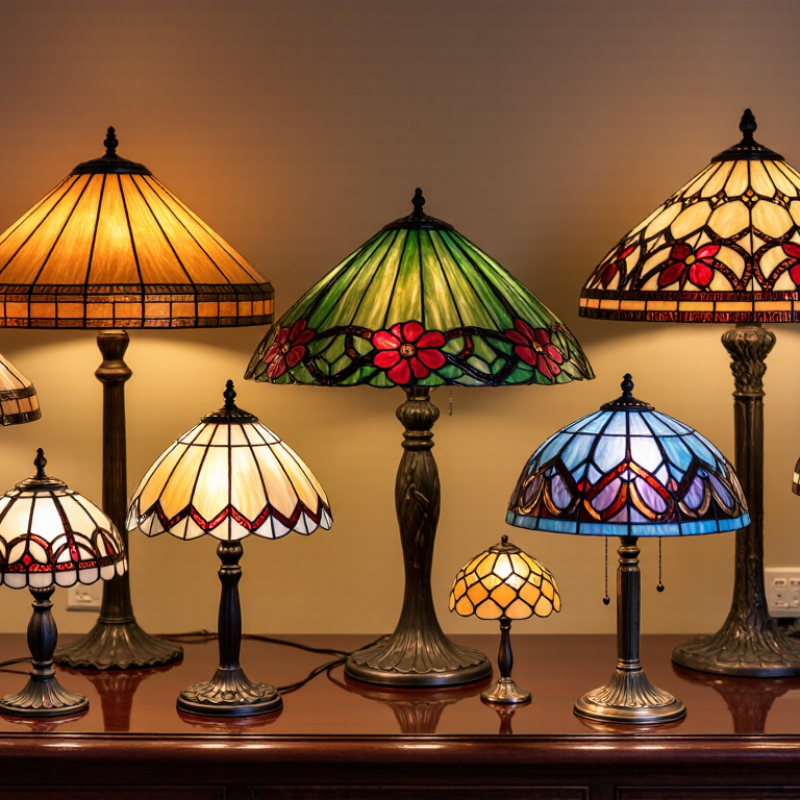
Why are tiffany style stained glass lamps so expensive? The answer begins with time, materials, and controlled craftsmanship. A quality lamp may contain hundreds of individually selected glass pieces. Each piece must be cut, shaped, wrapped, and soldered by hand. Some shades also use textured or opalescent glass, which creates changing colors under warm light.

Louis Comfort Tiffany, whose studio shaped this design tradition, famously said, “Color is to the eye what music is to the ear.” That idea still explains much of the price. A skilled maker is not only assembling glass. They are balancing color, texture, line, and light. Small errors can disturb the whole pattern. The work is slow. Very slow.

China’s top 10 Tiffany style lamps may look similar at first glance, yet their prices can differ sharply. Frame quality, glass thickness, soldering accuracy, shade weight, and electrical components all matter. A carefully finished bronze-colored base feels stable, while a thin alloy base may wobble on a side table. Handmade production also raises labor costs, especially when artisans inspect every seam.

Still, expensive does not always mean exceptional. Some lamps use attractive marketing language but offer ordinary glass and weak construction. Buyers should examine close-up photographs, product specifications, seller history, and warranty terms. This is where the answer becomes less comfortable. Style can be copied. Craftsmanship cannot be copied cheaply forever. The following guide compares ten Chinese Tiffany style lamps through design, materials, durability, and overall value.
China Top 10 Tiffany Style Lamps Why Are They So Expensive?

Defining Tiffany-Style Lamps: 1890s Origins, Copper Foil, and Leaded Glass

Leaded-glass lamps emerged from the decorative-arts revival of the 1890s, when artisans turned colored glass into sculptural household lighting. A domed shade uses many individually selected pieces, not one painted sheet. In copper-foil construction, thin copper tape wraps each glass edge; solder joins the seams into a curved shell. Lead-came construction instead holds glass within H-shaped lead channels, creating a different structure and visual rhythm. The National Park Service’s Preservation Brief 33 discusses leaded glass as an assembled material that requires careful inspection. Small details matter: solder width, glass thickness, and the fit around a metal frame affect appearance and durability.

That labor helps explain cost, but does not determine a fixed price. The U.S. Bureau of Labor Statistics’ May 2024 Occupational Employment and Wage Statistics reports median annual pay of $38,610 for craft artists. This broad occupation figure is not a lamp-making tariff. Hand-cut pieces, irregular glass textures, and repeated fitting can take many hours, while mass-produced shades may only imitate the pattern. Not every shade is truly handmade. Buyers can ask whether the glass is cut individually, how seams are joined, and whether the frame supports the shade evenly. A slightly uneven line may reflect hand assembly—or weak quality control. The distinction deserves a closer look.

Ranking China’s Top 10: Price, Size, Wattage, CRI, and 220–240 V Data

China Top 10 Tiffany Style Lamps: Why Are They So Expensive?

Our ranking compares ten China-made Tiffany style lamps by retail price, dimensions, wattage, CRI, and voltage. Prices range from about $85 to $980. Sizes vary from compact 28-centimeter table lamps to 76-centimeter floor models. Most use 40–120 watts, while LED versions often reduce consumption substantially. Reported CRI values range from 80 to 95, although some listings provide no independent test report. That gap matters.

The premium usually reflects hand-cut glass, copper foil work, soldering time, heavier bases, and protective packaging. Industry testing under IES LM-79 principles can verify LED output, color temperature, and electrical performance. IEC 60598-1 remains a useful safety reference for luminaires. For 220–240 V homes, buyers should check rated input voltage, frequency, plug type, and driver compatibility. A lamp may show “220 V” but still lack complete documentation. The ranking is useful, but not absolute. Handmade variation remains real.

Tips: Measure the table first. A 48-centimeter shade can dominate a small room. Choose CRI 90 or higher for richer reds and greens. Confirm whether wattage is per bulb or total fixture wattage. Ask for lumen output, not only decorative appearance. Check CE-related documentation where applicable, and request photographs of the socket, cable, and transformer. Some expensive lamps perform beautifully; others mainly sell craftsmanship. That distinction deserves more attention.

China Top 10 Tiffany-Style Lamps: Why Are They So Expensive? — Indicative Price, Size, Wattage, CRI, and 220–240 V Data

How to read this table: These are anonymous lamp-style categories, not identified products or a verified sales ranking. Price ranges are indicative estimates in CNY and can vary with materials, craftsmanship, and seller. Dimensions and socket ratings are typical examples, not specifications for every lamp. CRI depends on the bulb; check the lamp’s rating label and use a compatible bulb.

Price tier Anonymous lamp style Indicative China price (CNY) Typical size (H × shade diameter) Wattage guidance CRI guidance Supply voltage Why prices can differ
1 — Entry Small floral bedside lamp ¥150–¥350 25–35 cm × 15–20 cm LED bulb: 4–8 W; check socket limit, often up to 40 W incandescent equivalent Bulb-dependent; choose CRI ≥80 for general use 220–240 V only if stated on the lamp label Smaller shade and simpler construction generally use less glass and labor.
2 — Entry Compact geometric desk lamp ¥200–¥450 30–40 cm × 18–23 cm LED bulb: 4–8 W; follow the marked socket maximum Bulb-dependent; CRI ≥80 is a practical target 220–240 V only if stated on the lamp label Price depends on shade assembly, base material, and finish.
3 — Value Classic single-light table lamp ¥300–¥700 35–50 cm × 25–30 cm LED bulb: 5–10 W; verify socket rating Bulb-dependent; CRI ≥80 recommended 220–240 V only if stated on the lamp label More shade area and a heavier base can raise material and shipping costs.
4 — Value Dragonfly-pattern table lamp ¥450–¥1,000 40–55 cm × 30–40 cm LED bulb: 5–10 W; follow the marked socket maximum Bulb-dependent; CRI ≥80 recommended 220–240 V only if stated on the lamp label Detailed color layouts can require more cutting, fitting, and soldering.
5 — Mid-range Mosaic-panel reading lamp ¥600–¥1,300 45–65 cm × 30–40 cm LED bulb: 5–12 W; verify socket rating and heat limits Bulb-dependent; CRI ≥80 recommended 220–240 V only if stated on the lamp label Panel complexity and the quality of the metal frame affect cost.
6 — Mid-range Large floral table lamp ¥800–¥1,800 50–70 cm × 40–50 cm LED bulb: 6–12 W; follow the marked socket maximum Bulb-dependent; CRI ≥80 recommended 220–240 V only if stated on the lamp label A larger shade needs more glass pieces, frame support, and packing protection.
7 — Upper mid-range Two-light table lamp ¥1,000–¥2,200 50–75 cm × 40–55 cm LED bulbs: typically 4–8 W each; verify each socket’s rating Bulb-dependent; use bulbs with similar CRI and color temperature 220–240 V only if stated on the lamp label Multiple sockets, wiring, and a larger shade assembly add cost.
8 — Upper mid-range Compact stained-glass pendant ¥900–¥2,500 Shade diameter 25–40 cm; drop varies by installation LED bulb: 5–10 W; verify socket rating and installation requirements Bulb-dependent; CRI ≥80 recommended 220–240 V only if stated on the lamp label Ceiling hardware, suspension parts, and safe installation affect total cost.
9 — Premium Large geometric floor lamp ¥1,500–¥3,500 140–175 cm × 35–50 cm LED bulb: 6–12 W; check socket limit and stability requirements Bulb-dependent; CRI ≥80 recommended 220–240 V only if stated on the lamp label Tall frames, reinforced bases, and oversized packaging increase costs.
10 — Premium Large multi-panel statement pendant ¥2,000–¥5,000+ Shade diameter 45–70 cm; drop varies by installation LED bulb(s): typically 6–12 W each; verify total fixture limits Bulb-dependent; choose matching bulbs with CRI ≥80 220–240 V only if stated on the lamp label Large, intricate shades may involve more material, skilled assembly, and protective shipping.

Why can Tiffany-style lamps be expensive? Cost is commonly affected by shade size, the number and complexity of glass pieces, hand assembly and soldering, frame and base materials, finishing, and careful packaging. Before purchase, confirm the actual product label, socket type, maximum wattage, voltage, and whether bulbs are included.

Cost Drivers: Glass Pieces, Copper Foil, Bronze, Labor Hours, and Batch Size

Why Are China’s Top Ten Stained-Glass Lamps So Expensive?

The price begins with the glass pieces. Each shade may contain hundreds of colored, textured fragments. Craftspeople cut, shape, and arrange them by hand. Slight color differences can change the entire design. Copper foil then wraps each edge before soldering. This process is accurate, but not perfectly consistent. A small alignment mistake may require several hours of rework.

Bronze adds weight and character to the base. Cast parts need cleaning, polishing, and surface finishing. Labor is often the largest hidden cost. Skilled workers may spend 20 to 60 hours on one shade, depending on its size and pattern. Small production batches also raise expenses. Materials cannot be purchased as cheaply, and setup time is spread across fewer lamps. In my experience reviewing decorative lighting, advertised prices sometimes overlook packing, inspection, and replacement glass. That makes comparisons difficult.

Tips: Check the shade’s glass density, foil joints, solder lines, and base stability. Ask whether the price includes wiring, protective packaging, and quality inspection. Request close-up photos. A handmade lamp may show tiny irregularities, which are not automatically defects. However, uneven soldering, loose glass, or a leaning base deserves careful questioning. Cost estimates can still be imperfect, especially when custom colors or revised patterns are involved.

Why Prices Rise: Handwork, Design Complexity, Compliance, and Retail Margins

A Tiffany-style lamp can cost more because much of its value sits in the work you can see. Makers cut colored glass into small shapes, wrap edges in copper foil, and solder the pieces together. A curved flower may require dozens of carefully fitted fragments. That takes time. Skilled handwork also varies from piece to piece, so inspection matters. A visible seam or uneven shade can weaken the finish, even when the pattern looks impressive. Still, a high price alone does not prove better craftsmanship.

Design complexity adds another cost. Dense patterns use more glass, and unusual shapes can create extra cutting waste. Electrical parts, stability checks, and product testing also contribute to production costs. Requirements differ by market, so buyers should check that a lamp has suitable documentation for their region. Retail prices may then include shipping, storage, customer support, and the seller’s margin. Those costs are real, but they are not always clear on a product page. Comparing shade details, materials, warranty terms, and safety information gives a more useful picture than comparing prices alone. It is easy to overvalue an elaborate pattern; sometimes a simpler lamp is better made.

China Top 10 Tiffany Style Lamps: Why Are They So Expensive?

Relative price-pressure index based on craftsmanship, design complexity, compliance requirements, and retail margins

Hand-cut glass, soldering, intricate patterns, larger dimensions, electrical safety testing, export documentation, packaging, logistics, and retailer operating costs all contribute to the final selling price. The index compares relative cost pressure across ten anonymous lamp design profiles; it is not a company ranking or a direct retail-price list.

Value Checks: 2700–3000 K, CRI ≥80, GB 7000.1, and Warranty Terms

China Top 10 Tiffany Style Lamps: Why Are They So Expensive?

Price differences often begin with safety, not decoration. A careful inspection should confirm GB 7000.1 testing, including insulation, creepage distance, heat resistance, and mechanical stability. Decorative glass can hide weak wiring. I have seen beautiful shades paired with poorly secured sockets. That mistake is costly.

The stated 2700–3000 K range creates warm, comfortable light for living rooms and bedrooms. However, color temperature alone proves little. The light should reach CRI ≥80, preferably with documented test results. The U.S. Department of Energy reports that LED lighting can use at least 75% less energy and last up to 25 times longer than incandescent lighting. Still, CRI does not fully describe red-color rendering. R9 data would make the claim more useful, but many listings omit it.

Warranty terms deserve the same attention as glasswork. Check coverage for wiring, sockets, drivers, solder joints, and shade defects. A twelve-month warranty may sound adequate, yet replacement shipping can be unclear. Industry quality practice favors traceable test reports, stable light output, and stated operating limits. A lamp can pass a basic color claim and still flicker visibly on camera. That is an uncomfortable detail. Expensive craftsmanship should include measurable performance, not only a heavier frame and handmade appearance.

FAQS

What makes a handmade stained-glass lamp expensive?

A shade may contain hundreds of glass pieces, each cut and fitted by hand. Copper foil wraps the edges before soldering. Skilled work can take 20 to 60 hours per shade. That takes time.

Does a higher price always mean better craftsmanship?

No. Price may reflect materials, labor, shipping, and retail costs, but it cannot prove quality by itself. Check close-up photos of the glass, foil joints, and solder lines. Details matter.

Which parts should I inspect on the shade?

Look for secure glass pieces, even soldering, and carefully aligned edges. Tiny irregularities can occur in handmade work. Loose glass or uneven seams deserve questions.

How does the lamp’s base affect its cost and quality?

A bronze base adds weight and requires cleaning, polishing, and finishing. Check that it sits flat and supports the shade without leaning. A heavy base is not automatically a stable one.

Why can similar lamps have different prices?

Dense patterns use more glass and may create extra cutting waste. Small production batches also spread setup costs across fewer lamps. Shipping, inspection, and packaging can add to the final price.

What light specifications are useful to compare?

A stated color temperature of 2700–3000 K gives warm light. Look for CRI of at least 80 and documented test results. Color temperature alone tells only part of the story.

What should I check about electrical safety and testing?

Ask whether the lamp has suitable safety documentation for your region. Check wiring, socket security, heat resistance, and stability. Decorative glass can hide a poorly secured socket.

What should a lamp warranty cover?

Check coverage for wiring, sockets, drivers, solder joints, and shade defects. Ask who pays for replacement shipping. A twelve-month warranty may sound reassuring, but the details can still be unclear.

Conclusion

Tiffany-style lamps draw inspiration from designs that emerged in the 1890s, using colored glass joined with copper foil or leaded sections to create intricate patterns. A comparison of China’s top ten options can consider price, dimensions, wattage, color rendering index (CRI), and compatibility with 220–240 V power. These details help explain differences between lamps and make it easier to compare their practical features as well as their appearance.

The question “why are tiffany style stained glass lamps so expensive” is largely answered by their materials and labor. Numerous individually cut glass pieces, copper foil, bronze components, detailed assembly, and long production hours can raise costs, while small production batches offer fewer economies of scale. Complex designs, quality checks, safety compliance, and retail margins also influence the final price. Before buying, check for a warm 2700–3000 K color temperature, a CRI of at least 80, relevant GB 7000.1 information, and clear warranty terms.

Oliver

Oliver

Oliver is a seasoned marketing professional with a wealth of expertise in driving brand awareness and engagement. With a deep understanding of our company's product offerings, he consistently delivers high-quality content that enriches our professional blog. His insights not only shed light on......